


iPod Mini 1G — Flash Mod Service (installed by iMods)
iPod Mini 1G — Flash Mod Service (installed by iMods)
New · Model A1051
$139.90
Sold out
Not for sale right now
We are not selling this part at the moment.
- Condition: new flash storage, fitted and tested by us
- 1-year limited warranty · 30-day returns from delivery
- Free pry tool in the box
- Completed repairs aren't refundable. If a part we fitted fails within a year, we repair it again.
Questions about this flash mod? Chat with us or email sales@imods.com.
Not sure what's wrong? Get your free repair quoteService details
About this service
Overview
We replace the Microdrive in your iPod Mini with flash storage and can fit a new battery at the same time: nothing left to click, stall or seize, a lighter iPod, and longer play on a charge. Mail it in; we fit it, restore it, test it and send it back.
At a glance
Satisfaction guaranteed.
Your iPod Mini, flash-modded
A flash mod takes out your iPod Mini’s Microdrive and puts flash storage in its place: a memory card on a flash adapter. People also search for it as an SD card mod or an SSD upgrade. It ends Microdrive failures: there is no mechanical drive left to click, stall or seize. The iPod gets lighter and plays longer on a charge. You choose 128GB or 256GB, and both sizes run Apple’s own iPod software.
Mail us your iPod and we do the rest: we fit the flash storage in the size you choose, add a new battery if you want one, restore Apple’s software, test it, and send it back with a 1-year limited warranty. It typically takes 3–5 business days on our bench.
Rather buy one built for you? Every refurbished iPod Mini 1st Gen we sell can be ordered with flash storage: see them all.
What a flash mod fixes
If your iPod Mini’s Microdrive is failing, now is the ideal time for a flash upgrade. When the Microdrive is the cause, a flash mod fixes the problems below, because the part that fails is the part we take out.
- A sad face on the screen.
- A folder icon that keeps coming back.
- Clicking or grinding from inside.
- Freezing or skipping songs.
- Stuck on the Apple logo, or it keeps turning itself off.
- It won’t restore.
- It doesn’t show up on the computer, or a sync stops partway.
Not sure it’s the Microdrive? Our free diagnostic tells you, with no obligation.
Why flash
No more Microdrive failures
Flash storage has no heads, platters or motor, so the clicking, stalling and seizing that end an old Microdrive can’t happen.
Longer battery life
Your iPod Mini spins its Microdrive up again and again to load more music, and a spinning drive draws two to three times the power of a memory card. With flash, your iPod plays longer on a charge.
Up to 256GB of room
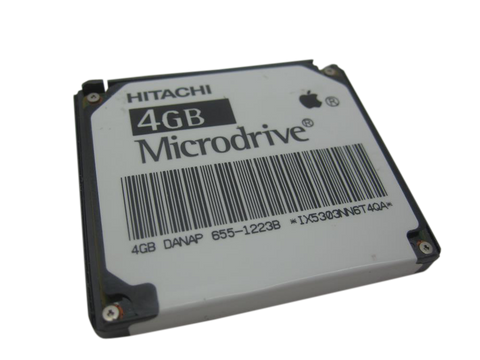
Far more room than the original 4GB Microdrive: 128GB or 256GB.
No spin-up wait
A Microdrive has to spin up before it can load your next songs. Flash storage is ready in a split second, so a new album starts without that wait.
Silent
No spinning, no clicking: flash storage makes no sound at all.
Lighter, with no drive to crash
A drop most often damages the Microdrive, and a drive is most fragile while it spins. Flash storage has no heads or platters to crash, and with no Microdrive inside, your iPod weighs less. The screen and case can still break in a fall.
Better for workouts
No spinning drive for a run, a ride or a bumpy commute to jolt. A Microdrive is most easily hurt while it spins, and it spins up again and again to load more music.
Every card tested
We test every memory card before we fit it. Fake cards that claim more space than they have are common, and they lose music once they fill up.
Why keep your iPod? Apple no longer repairs these iPods. We do: Apple now repairs only the last two iPod touch models, and a flash mod from us keeps your click-wheel iPod playing, instead of in a drawer or a landfill. If it stopped working because its Microdrive failed, a flash mod brings it back. And it plays your own music, offline: no subscription, no algorithms, no notifications.
What’s included
The price includes the flash adapter, the memory card, fitting, restore and test. Not included: moving the songs from your old Microdrive (back up your library first, or add our $129 music transfer), and repairs to any other part of the iPod. Shipping: choose “We Fix It + box” and we send you our protective box, a bubble mailer and a prepaid USPS label, or choose “We Fix It” and pack it yourself in any sturdy box.
How it works
- Order online. Choose the size and the battery above. Pick “We Fix It + box” if you would like our shipping box and prepaid label.
- Mail your iPod. Two things go in the box: your iPod and your work order. No cables, cases or docks. No printer? Put a note in the box with your name, return address, email, order number and what is wrong with it, if anything. Mailing instructions
- We fit and test it. Flash storage in, a new battery if you chose one, Apple’s software restored, then tested: it plays, charges and syncs. Typically 3–5 business days on our bench.
- It comes back to you. Shipped back with a 1-year limited warranty, satisfaction guaranteed.
Before you send it: your music
The flash storage replaces the Microdrive, so the songs on it don’t carry over on their own. Sync or back up your library with iTunes or the Finder before you send the iPod, or add our music transfer. If the iPod still shows up on your computer, copy off anything you want to keep: here is how to copy music from an iPod to a computer. If the iPod was set up on a Mac, copy the music on a Mac: iTunes for Windows only recognizes iPods formatted on Windows. If it clicks or drops off the computer while you copy, stop and send it for our free diagnostic.
If it no longer shows up, contact us before you order: what we can do for the songs on a failing Microdrive is case by case, and songs can’t always be recovered.
Music transfer, $129, with your flash mod. Tick “Add music transfer” when you order. If your old Microdrive still shows up on our bench computer, we copy everything on it, your songs and playlists, onto the new flash storage, so your iPod comes back with its library on it. If the Microdrive won’t read, we refund the $129. It adds 1–2 business days. When it comes back, sync it only with a library that has those songs: a sync makes the iPod match the computer. To put them in your library first, copy them off the iPod.
Add a new battery
We can fit a new battery while your iPod Mini is open: choose it under “Add a new battery” when you order. The new battery is 5% off with your flash mod.
On the iPod Mini the battery sits behind the screen: a swollen one rarely bulges the case, but it shows as a dark spot on the display, and the spot usually fades once the battery is replaced.
A swollen battery is worn out and no longer safe: stop charging it. You can still mail the iPod to us as normal.
Apple’s figures for a new iPod Mini 1st Gen: up to 8 hours of music, and about 3 hours for a full charge. With flash, the iPod plays longer on a charge than it did with its Microdrive. These iPods have no battery-health screen: a battery that runs out much sooner than Apple’s rating is most likely worn out.
Fit and specs
Which iPods this flash mod fits
This flash mod is for every iPod Mini 1st Gen (model A1051 on the back, 2004): the 4GB in silver, blue, pink, green or gold. Not sure which iPod Mini you have? Both generations say A1051 on the back, so look at the click wheel: lettering in a color other than gray means a 2nd Gen. A 6GB Mini is always a 2nd Gen. Settings > About also shows the model. More help: how to identify your iPod.
| Order number | Capacity | Color |
|---|---|---|
| M9160LL/A | 4GB | Silver |
| M9436LL/A | 4GB | Blue |
| M9435LL/A | 4GB | Pink |
| M9434LL/A | 4GB | Green |
| M9437LL/A | 4GB | Gold |
Have an iPod Mini 2nd Gen? It takes the same flash mod: see its page.
Not this iPod? See every flash mod we fit.
Flash capacity and the limit on how many songs fit
We fit 128GB or 256GB in the iPod Mini 1st Gen.
The limit on how many songs fit is set by the iPod’s own memory and by how much your library stores about each song (titles, artwork), not by the size of the memory card.
A library too big for the iPod’s memory brings its own faults: sudden restarts, skips and crashes on big playlists, and sluggish menus. If that happens, put the iPod in Disk Mode and remove some songs. To enter Disk Mode, reset it by holding Menu and Center until the Apple logo appears, then hold Center and Play/Pause together for a few seconds as it restarts.
Specifications
| Detail | This service |
|---|---|
| Service | Mail-in flash mod, fitted by us |
| For | iPod Mini 1st Gen, model A1051 |
| Flash sizes | 128GB or 256GB |
| What we fit | A flash adapter and a memory card, in place of the Microdrive |
| Battery | Keep yours, or add a new battery |
| Software | Apple’s own iPod software, restored on the new storage |
| Turnaround | Typically 3–5 business days on our bench |
| Shipping box | Optional: our box, bubble mailer and prepaid label (“We Fix It + box”) |
| Warranty | 1-year limited warranty from the date of delivery |
How we fit it
How we install your flash mod
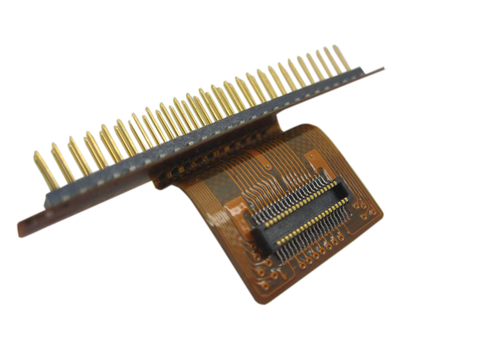
On our bench we open your iPod Mini, take out the Microdrive and fit the flash adapter and its memory card where the Microdrive was.
We fit the new battery if you chose one, restore Apple’s software on the new storage and test the iPod: it plays, charges and syncs. No soldering.
After your flash mod: syncing and restore tips
Your iPod comes back with Apple’s software already restored and tested, ready for your music. If it asks for your language when you turn it on, turn the wheel to yours and press the Center button: every iPod asks after a restore, a forced restart or a flat battery.
Connect it and sync: in the Finder on a Mac with macOS Catalina or later, or in iTunes on a Windows PC or an older Mac. On Windows 10 or 11, get iTunes from the Microsoft Store (or apple.com/itunes); on Windows 7 or 8, use iTunes 12.10.11. A Mac laptop with Apple silicon asks you to Allow the accessory, and a Mac with only USB-C ports needs a USB-C to USB adapter. If the iPod doesn’t appear in the Finder sidebar, turn on Finder > Settings > Sidebar > “CDs, DVDs, and iOS Devices”. Here is how to put music on an iPod.
While it is connected, a “Do not disconnect” screen is normal, not an error: eject the iPod before you unplug it. If you ever restore it yourself, copy off anything you want to keep first: a restore erases every song on it.
If the battery is flat when it arrives, charge it from a wall charger and leave it on the charger while it starts up.
If a restore you run yourself stops at a picture of a plug, connect the iPod to a wall charger to let it finish. Generic or incompatible chargers don’t always give the iPod the right voltage; Apple’s A1070 wall charger is the ideal choice.
Something not right? Our 1-year limited warranty covers our work: contact us.
Troubleshooting
Microdrive failure: how to tell
These checks help you tell whether the Microdrive is the cause:
- A sad face is always hardware: the Microdrive or its cable.
- A folder icon that keeps coming back, especially after a failed restore, most likely means the Microdrive.
- Hold the iPod to your ear: unusual clicking patterns, like a “click, click, whir” or grinding, are a strong sign the Microdrive is failing.
Diagnostic Mode gives a firmer answer: a high number of reallocated or pending sectors, or numbers that rise each time you check, mean the Microdrive is failing. Pending sectors are the sharper warning: any at all are a reason to copy your music off now. If the iPod still shows up on a computer, copy your music off before any drive test. Here is how to use Diagnostic Mode.
Not sure the drive is the only problem? Send it for our free diagnostic: we test it and email you a quote, with no obligation, and if you don’t like the quote, we ship it back at our expense.
Problems a flash mod won’t fix
A flash mod replaces the Microdrive. It won’t fix a worn battery (add a new one when you order), a cracked or blank screen, a click wheel or center button that doesn’t respond, sound problems, or a damaged dock connector (the charging port). If one of those is part of the problem, start with our free diagnostic: we test the iPod and quote the whole repair, with no obligation.
Worth knowing
- Both iPod Mini generations use the same Microdrive and drive cable, and the same battery.
- Apple sold the iPod Mini from January 2004, in 4GB only; the 2nd Gen followed in February 2005, in 4GB and 6GB.
Questions
Frequently asked questions
Does the 256GB run Apple’s software?
Yes. Both sizes, 128GB and 256GB, run Apple’s own iPod software.
Want more room later?
We can fit a bigger card in the same flash mod, up to the largest size we offer for your iPod; ask us for a price.
Will the battery last longer?
Yes. Flash uses less power: a spinning drive draws two to three times the power of a memory card, so a flash build plays longer on a charge. How much longer depends on what you play: lossless files gain the most, while the screen light uses far more power whatever the storage. A worn battery still limits it: if yours runs out much sooner than Apple’s rating, add a new one when you order.
Does playing music wear the card out?
Barely. Memory cards wear when data is written to them, and playing music only reads.
Does it work in the cold?
The memory card we fit is rated from -25 °C (-13 °F), so the cold no longer stops the storage. Apple still rates the iPod itself for 0 to 35 °C (32 to 95 °F), and play time can shorten in the cold.
Heading for the mountains?
Hard drives, the Microdrive included, can fail in the thin air above about 10,000 feet, because their heads ride on a cushion of air. Flash storage has no drive heads, so thin air does not affect the storage. (Apple’s 10,000-foot rating for the iPod itself still applies.)
Can a flash mod still fail?
Flash ends Microdrive failures, not every fault: a memory card, the adapter or a cable can still fail. They are covered by our 1-year limited warranty.
What happens to my music?
The flash storage replaces the drive, so the music on it does not carry over on its own. Sync or back up your library with iTunes or the Finder before you send the iPod, or add our music transfer ($129) when you order: if your old drive still reads, we copy everything on it onto the new flash storage. If it won’t read, we refund the $129.
Does it work with my Mac or PC?
Yes. It syncs like any iPod: in the Finder on a Mac with macOS Catalina or later, or in iTunes on a Windows PC or an older Mac.
Do I need to restore it when it arrives?
No. We restore Apple’s software and test it before it ships: connect it and sync your music. With the music transfer, your library is already on it: sync it only with a library that has those songs.
How long does it take?
Typically 3–5 business days on our bench after your iPod arrives, then the trip back to you. The music transfer adds 1–2 business days.
What do I send you?
Your iPod and your work order (or a note with your name, return address, email, order number and what is wrong with it, if anything). Nothing else: no cables, cases or docks.
What does the warranty cover?
Parts and repairs carry a 1-year limited warranty from the date of delivery, covering the specific component we repaired or replaced. Completed repairs aren’t refundable; the warranty covers them.
Can I buy the flash adapter and card to fit myself?
No. The flash mod is a service: we fit it, restore Apple’s software, test it and cover it with our 1-year limited warranty.
Does the iPod Mini share parts with the full-size iPods?
No. The iPod Mini is its own line: no Mini part fits a full-size iPod, or the other way round.
You may also want
Search terms
Also searched as
Also searched as: iPod mini flash mod, iPod mini mod, iPod mini storage upgrade, iPod mini mods, iPod mini 1st gen mods, iPod mini SD card mod, iPod mini modding, iPod mini hard drive upgrade, iPod mini compact flash mod, compact flash card iPod mini, iPod mini compact flash adapter, iPod mini flash upgrade, iPod mini SD card, 256GB iPod mini, CF iPod mini, compact flash iPod mini, flash iPod mini, flash mod for iPod mini, flash modding iPod mini, iPod mini flash adapter, iPod mini flash storage, iPod mini SD card adapter, iPod mini SD card upgrade, iPod mini SD mod, iPod mini SSD, iPod mini SSD mod, iPod mini SSD upgrade, iPod mini storage capacity, iPod mini upgrade, modded iPod mini.
Free diagnostic
Broken iPod? We can help.
Mail us your iPod and we will test it and send you a free repair quote. If you don't like our price, we will ship your iPod back at our expense.
How mail-in repair works
Order the free diagnostic
Choose your iPod. Add our shipping box and prepaid label if you need one.
Mail us your iPod
Pack it with your work order. No printer? Put a note in the box with your name, return address, email, order number and what is wrong.
Approve your quote
We test it and email your free repair quote. Most repairs are finished within 3 to 5 business days after you approve the quote.